
Die folgende Liste ist eine Auswahl von Dissertationen der Alumni von Munich Aerospace:
2021

Christoph D. Traxinger
Promotionsthema: Real-Gas Effects and Single-Phase Instabilities during Injection, Mixing and Combustion under High-Pressure Conditions
Doktorvater: Prof. Michael Pfitzner (UniBwM)
Forschungsgruppe: Propulsion Technologies for Green In-Orbit Spacecraft
2020

Aaron Barth
Promotionsthema: Autonomous Rotorcraft for Extreme Altitudes
Doktorvater: Prof. Dr. Manfred Hajek (TUM)
Forschungsgruppe: Missionsgetriebene Auslegung, Regelung und Ausrüstung

Christian A. Bauer
Promotionsthema: Experimentelle und numerische Untersuchungen der gas-dynamischen Zündung für Satellitenantriebe
Doktorvater: Prof. Dr. Oskar Haidn (TUM)
Forschungsgruppe: Propulsion Technologies for Green In-Orbit Spacecraft

Ksenia Klionovska
Promotionsthema: Visual Navigation Using PMD Camera for On-Orbit Servicing Missions
Doktorvater: Prof. Dr. Felix Huber (UniBwM)
Forschungsgruppe: Raumfahrtrückstände - Erfassung, Vermeidung, Entfernung
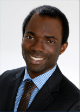
Oluwaferanmi Oguntona
Promotionsthema: Aircraft Fleet Renewal: Assessing Measures for Reducing CO2 Emissions
Doktorvater: Prof. Mirko Hornung (TUM)
Forschungsgruppe: Operationelle Modellierung, Simulation und Optimierung intermodaler Knoten im Luftverkehr

Srinivas J. Setty
Promotionsthema: Orbit and Uncertainty Propagation for Space Object Catalogue Maintenance
Doktorvater: Prof. Dr. Felix Huber (UniBwM)
Forschungsgruppe: Raumfahrtrückstände - Erfassung, Vermeidung, Entfernung
2019

Abolfazl Lavaei
Promotionsthema: Automated Verification and Control of Large-Scale Complex Stochastic Systems: Compositional Techniques
Doktorvater: Prof. Dr. Majid Zamani (TUM)
Forschungsgruppe: Certifiable Autonomy in Unmanned Aerial Vehicles
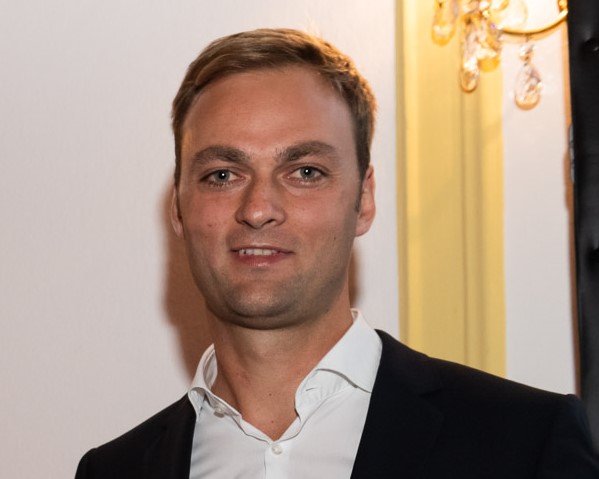
Christoph Schinwald
Promotionsthema: Evaluation of Airport Capacity Optimisation Measures: A System Wide Perspective
Doktorvater: Prof. Dr. Mirko Hornung (TUM)
Forschungsgruppe: Operationelle Modellierung, Simulation und Optimierung intermodaler Knoten im Luftverkehr

Harvey Gomez
Promotionsthema: Space Relative Navigation for Autonomous Safe Capture of Non-Cooperative Targets
Doktorvater: Prof. Dr. Bernd Eissfeller (UniBwM)
Forschungsgruppe: Raumfahrtrückstände - Erfassung, Vermeidung, Entfernung
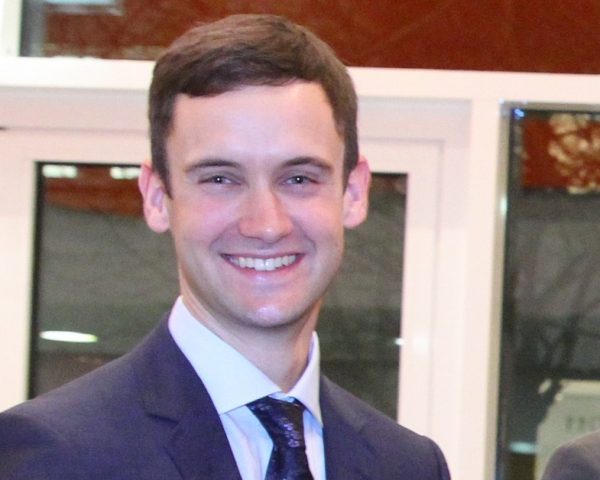
Stefan Hackel
Promotionsthema: Hochpräzise Bahnbestimmung von TerraSAR-X zur Validierung von Messverfahren der geodätischen Erdbeobachtung
Doktorvater: Dr. rer. nat. habil. Oliver Montenbruck (TUM)
Forschungsgruppe: Hochauflösende Geodätische Erdbeobachtung: Korrekturverfahren und Validierung
2018

Jens Trümner
Promotionsthema: Interdisciplinary analysis and optimization of the hot nozzle in a mixed flow engine (Förderer: MTU Aero Engines)
Doktorvater: Prof. Dr. Christian Mundt (UniBwM)

Marco B. Vietze
Promotionsthema: Gekoppelte aerothermodynamische und strukturmechanische Optimierung kryogener Raketenoberstufen (Förderer: MT Aerospace)
Doktorvater: Prof. Dr. Christian Mundt (UniBwM)

Michael Schmidt
Promotionsthema: Challenges for Future Aircraft Concepts: Interdependencies between Future Aircraft Concepts and Airport Operations
Doktorvater: Prof. Dr. Mirko Hornung (TUM)
Forschungsgruppe: Operationelle Modellierung, Simulation und Optimierung intermodaler Knoten im Flugverkehr

Sebastian Herbst
Promotionsthema: Development of an aircraft design environment using an object-oriented data model in MATLAB
Doktorvater: Prof. Dr. Mirko Hornung (TUM)
Forschungsgruppe: Operationelle Modellierung, Simulation und Optimierung intermodaler Knoten im Luftverkehr
2017
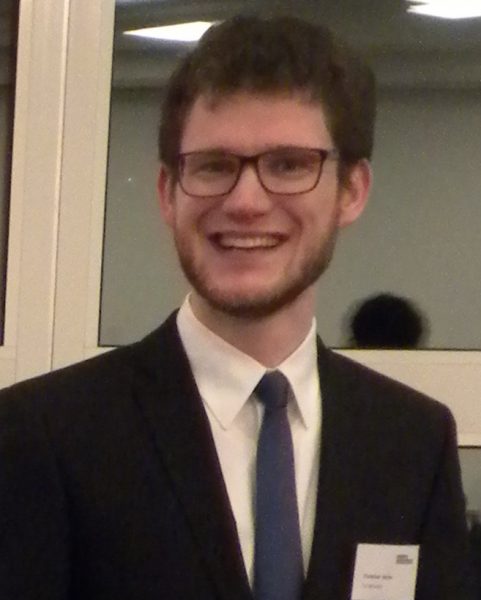
Christian D. Heise
Promotionsthema: Evaluation of Airport Capacity Optimisation Measures: A System Wide Perspective
Doktorvater: Prof. Dr. Florian Holzapfel (TUM)
Forschungsgruppe: Adaptive Flugregelung – Leistungsgarantien und Robustheitsmetriken

Claas H. Grohnfeld
Promotionsthema: Exploiting Sparsity in Earth Observation – Modeling
Doktorvater: Prof. Dr. Xiaoxiang Zhu (TUM)
Forschungsgruppe: SparsEO- Sparse Reconstruction and Compresssive Sensing for Remote Sensing and Earth Oberservation

Konstantin Palagachev
Promotionsthema: Mixed-Integer Optimal Control and Bilevel Optimization: Vanishing Constraints and Scheduling Tasks
Doktorvater: Prof. Dr. Matthias Gerdts (UniBwM)
Forschungsgruppe: Generierung von optimalen Referenzflugbahnen für autonome Flugsysteme unter Berücksichtigung von Konfigurationsänderungen

Matthias Rieck
Promotionsthema: Generierung von optimalen Referenzflugbahnen für autonome Flugsysteme unter Berücksichtigung von Konfigurationsänderungen
Doktorvater: Prof. Dr. Florian Holzapfel (TUM)
Forschungsgruppe: Konfigurationsabhänge Beschränkungen in der Flugbahnoptimierung

Thomas H. Ramcke
Promotionsthema: Modeling of thermodynamics, heat transfer and combustion in green in-orbit rocket propulsion systems
Doktorvater: Prof. Dr. Michael Pfitzner (UniBwM)
Forschungsgruppe: Propulsion Technologies for Green in-Orbit Spacecrafts
2016
Guido Wortmann
Promotionsthema: Investigating the Dynamic Response of Hybrid-Electric Propulsion Systems for Flight Control Application
Doktorvater: Prof. Dr. Mirko Hornung (TUM)
Forschungsgruppe: Generierung von optimalen Referenzflugbahnen für autonome Flugsysteme unter Berücksichtigung von Konfigurationsänderungen

Jacopo Ventura
Promotionsthema: Autonomous Proximity Operations for Noncooperative Space Target
Doktorvater: Prof. Dr. Ulrich Walter (TUM)
Forschungsgruppe: Real-Time Telepräsenz und Weltraumrobotik

Jan Siminski
Promotionsthema: Object correlation and orbit determination for geostatitionary satellites using optical measurements
Doktorvater: Prof. Dr. Felix Huber (UniBwM)
Forschungsgruppe: Raumfahrtrückstände - Erfassung, Vermeidung, Entfernung

Mohammadreza Babaee
Promotionsthema: Immersive Interactive Data Mining and Machine Learning Algorithms for Big Data Visualization
Doktorvater: Prof. Dr. Gerhard Rigoll (TUM)
Forschungsgruppe: Immersive Visual Information Mining for the TerraSAR-X / TamDEM-X Archive

Reza Bahmanyar
Promotionsthema: Conception and Assessment of Semantic Feature Descriptors for EarthObservation Images
Doktorvater: Prof. Dr. Mihai Datcu (DLR), Prof. Dr. Gerhard Rigoll (TUM)
Forschungsgruppe: Immersive Visual Information Mining for the TerraSAR-X / TamDEM-X Archive

Steffen Peter
Promotionsthema: SparsEO- Sparse Reconstruction and Compresssive Sensing for Remote Sensing and Earth Oberservation
Doktorvater: Prof. Dr. Massimo Fornasier (TUM)
Forschungsgruppe: SparsEO- Sparse Reconstruction and Compresssive Sensing for Remote Sensing and Earth Oberservation
Ehemalige und aktuelle Mitglieder des Stipendienprogramms und der Forschungsgruppen von Munich Aerospace sind dazu eingeladen, sich in der LinkedIn-Gruppe “Munich Aerospace Research Network” zu vernetzen.